
Companies and consumers look for eco-friendly solutions to the massive 450 Billion diaper a year disposable diaper problem
BY RIDER THOMPSON
Companies like gDiapers have made headlines as they and others introduce new innovative products into the growing "eco-friendly" diaper market. With each innovation it seems new questions arise as to whether they are actually improvements or just different versions of the same problem.
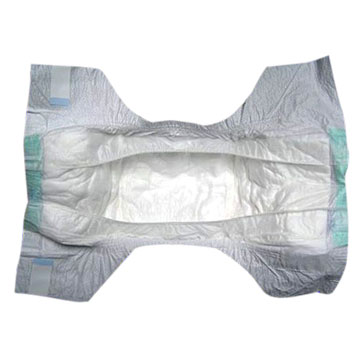
The facts are staggering. Studies have shown an infant goes through between 7,000 and 8,000 diaper changes before entering potty training. World Watch estimates 450 billion disposable diapers are used each year and contribute nearly 77 million tons of waste to landfills. Even worse, a disposable diaper normally made out of plastics takes around 500 years to degrade.
What is the solution? Well a number of companies have created "earth-friendly" diapers however there are varying opinions on how earth friendly these diapers actually are. Some experts believe the idea of a biodegradable diaper isn't a solution because of the fact many landfills aren't conducive to fostering the decomposition process.
Inventors are working to create a biodegradable diaper that will decompose under the conditions found in landfills. The Australian magazine Ecos reported inventor Charishma Seneviratne has developed just such a diaper.
The Safeties Nature Nappy as they are called will break down in six months under normal conditions or eight months under dry conditions according to the inventor. Her diapers are made from a new fabric she invented. They consist of eight layers and a protein gel, and a grafted polymer with natural starch technology to ensure liquid is drawn away from the skin. The diapers are available now in Australia and New Zealand and distribution deals are being worked out for Europe, the UK and the USA.
One company, gDiapers, has created a diaper system featuring a flushable insert. The Portland-based company says gDiapers are not made of plastic, elemental chlorine, perfumes so they're breathable, which means less diaper rash. It also means they break down, which is why they can be flushed, composted or thrown away.
In 2006 the BabyCenter Store signed an exclusive one year deal with gDiapers. As the only online store to carry the product, the BabyCenter Store has seen a dramatic increase in sales over the past year, up 211% from Q1 2006 to Q1 2007.
While the idea of a "flushable" insert sounds promising some aren't convinced. Seattle's King County Wastewater Treatment Division for one advises against flushing them down the toilet, since that may cause problems for home plumbing as well as sewer systems.
Alternate solutions exist, Google "EC baby" or "diaper free" my 19moth old last pooped in a cloth diaper 3 month ago while in the custody of a day care provider and if not for that incident it would be at least 9 months. 99% of poops land up in the toilet or potty and 50% of pees.
All it takes is a parent infant bond. surprisingly this is the default option for most of the worlds population - simply it works.
To be hones I live in a big city and believed EC was for hippies with poopy flours but my wife decided to try it at 4 months and I played along - all I can say is I love it - i take him for a poop every morning when i get up and thank heaven and earth that I don't have to deal with crap.
you need to start early before they learn bad habits its not a joke there is even dedicated yahoo groupie dishing out advice.
Posted by: Tim Watt | April 19, 2007 at 02:40 AM
Hi there
I am the CEO of gDiapers. I just wanted to clarify one point. King County has not actually tested the product and agreed to remove that statement. The product has been flushed safely down Australian toilets for 15 years. We have passed our US flushability tests. If consumers have concerns about their plumbing, the flushable insert can be tossed. As it is plastic free, it biodegrades significantly faster than a regular disposable diaper in landfill. In soil burial trials it biodegrades in 50 days.
We are the only consumer good with "Cradle to Cradle" product certification, which means every element of the product is reabsorbed back into the environment in a neutral or beneficial way. gDiapers is simply a third way of diapering. For those who love cloth - go for it. For those who can't get by without disposabales - no problem. But there are those who don't have time for cloth and feel bad about disposables. Those folks tend to be gDiapers customers.
Cheers
Jason
dad/ CEO
Posted by: Jason Graham-Nye | April 19, 2007 at 05:24 PM
People, BABIES DO NOT NEED DIAPERS. It's a myth.
For centuries mothers have user a simple technique called Ellimination Communication to tune in, understand, and respond to their infants' elimination needs to keep them clean and content.
Do you velieve that a 3 month baby DOES NOT NEED DIAPERS because it can signal you when it needs to go? Neither did I untill my first son was born and we decided to use the Ellimination Communication method with him.
As a result at 7 months he was completely diaperless and never needed one -- he was completely aware of his elimination needs. It is so simple -- babies can signal and can hold if you help them tell you.
Read http://www.naturalfamilyonline.com/5-diap/42-natural-infant-hygiene.htm or just search for elimination communication on Google
Posted by: Lu | July 18, 2007 at 01:24 AM
We studied the "EC Baby" fad for 2 years and found it to not only be a bad idea for potty training, but it leaves a major psychological scar on most of the children who are forced to endure it. We are Disposal Alternatives, a not-for-profit, privately funded and all volunteer driven organization that researches eco-friendly diapering alternatives. Our organization formed after realizing that most of the diapering alternatives are driven by those who profit at what they are trying to promote. Be it cloth diapers, "diaper free" etc. We have done extensive studies on cloth diapering as well and in most cases, disposables beat cloth in overall eco-friendliness. This does not mean you should not use cloth diapers if that is what you prefer but regardless of the “cloth is better” hype, they are less convenient, less sanitary and tougher on the environment.
BTW, our organization is different in that we run on our own private funds and resources, are completely 100% volunteer driven and we lead by example because we know there is a better way!
We have researched every kind of diaper and non-diaper out there as well as every perceivable method of cleaning, recycling and disposal and have found many facts that fly in the face of most of the marketing hype you read on the inet.
Disposable diapers are not as evil as many would have you believe. They only take up a very small portion of landfill space and are the most sanitary means of diapering. When you study a large landfill operation enough to really know what you are talking about, you realize that diapers are the least thing we have to worry about when it comes to ground-water contamination etc. in landfills…
Recycling disposable diapers is another win-win situation if it is done right!
We have a very efficient processor, as does Knowaste. Our design is small scale and we sell our technology at cost to large daycare providers who in turn can also accept diaperwaste from their surrounding communities. Knowaste processors can process an entire state or country’s diapers. They have built plants as large as 50,000 sq. feet!
Diapers have been around forever, they have a purpose and they have evolved as many things have and for good reasons. The sky is NOT falling because you use disposable diapers and you can still be good to the planet. Let’s see more people putting their resources in line with what they say they believe and lets all stop complaining!
FOOD FOR THOUGHT:
Nearly 50 coffee cups, 38 lbs of untreated animal dung and 220 lbs of sewer sludge go to landfill for every one disposable diaper!
You would be surprised at how much paper still ends up in the landfills instead of being recycled!
We still have lots of work to do and disposable diapers are hardly going to tilt the scales here…
Posted by: Disposal Alternatives | July 19, 2008 at 02:05 AM
I invented Diapettes over twenty years ago and didn't have the funding to complete my idea. The method that I believe is the next natural step in the evolution of the disposable diaper lies within Diapettes. Together we can help save the world, one child at a time
Posted by: Nathan E. Williams Sr. | July 28, 2008 at 01:17 AM